The Viziit journal
Iceland: waterfalls, geothermal energy and volcanic landscapes
From Goðafoss to Lake Mývatn, then from Silfra to the lava fields of Reykjanes: discover Iceland shaped by water and fire.
In Iceland, water, fire, and ice are never just scenery. They shape the roads, set the pace of travel, and sometimes transform the landscape from one season to the next. This route links the northern wonders around Mývatn with the geological sites of the southwest, at Þingvellir and on the Reykjanes peninsula.
Goðafoss, the waterfall of the gods
In northern Iceland, the Skjálfandafljót River drops about 12 meters in height and 30 meters in width at Goðafoss. The horseshoe shape and the different branches of the falls give the site a special force, even when the flow seems calm.
Two banks offer complementary viewpoints. The paths can become slippery in the rain or in winter: stay behind the barriers and resist the temptation to get close to the edge for a photo.
Lake Mývatn, a concentration of volcanic landscapes
Around Lake Mývatn, craters, lava formations, and wetlands follow one another across a relatively compact area. Dimmuborgir, Hverfjall, and the pseudo-craters of Skútustaðir make it possible to read different stages of this geological history.
The region is also home to important birdlife. In spring and summer, stay on the trails and respect nesting areas; the midges that gave the lake its name are also part of the experience.
Earth Lagoon Mývatn, the geothermal break
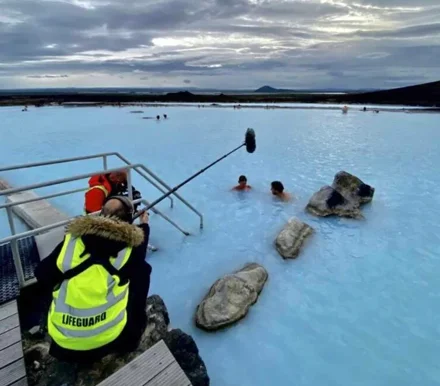
Long known as Mývatn Nature Baths, the site is now called Earth Lagoon Mývatn. Its pale blue geothermal waters offer a warm break in the middle of an open, mineral landscape.
Temperature, wind, and light give the bath a different atmosphere with every visit. A shower without a swimsuit before entering the pool is part of Icelandic rules; it is also advisable to book in advance and check current opening hours.
Hverir, when the earth breathes
To the east of the lake, the Hverir geothermal field brings together mud pools, fumaroles, and ground tinted yellow, ochre, and gray. The steam and smell of sulfur make the energy circulating beneath the surface immediately perceptible.
The ground can be scorching and fragile outside the marked paths. You must stay strictly on the trails, not touch anything, and take the wind into account, as it sometimes blows the steam back toward visitors.
Silfra, in the clear waters of Þingvellir
Silfra is a submerged fissure in Þingvellir National Park, at the heart of the rift zone. The groundwater, filtered for years through lava fields, offers exceptional visibility but remains very cold all year round.
Diving and snorkeling are regulated. It is forbidden to enter the water alone, and participants must comply with the park’s qualification, equipment, and supervision requirements. The experience is therefore never improvised from the shore.
Geldingadalir, the landscape born before our eyes
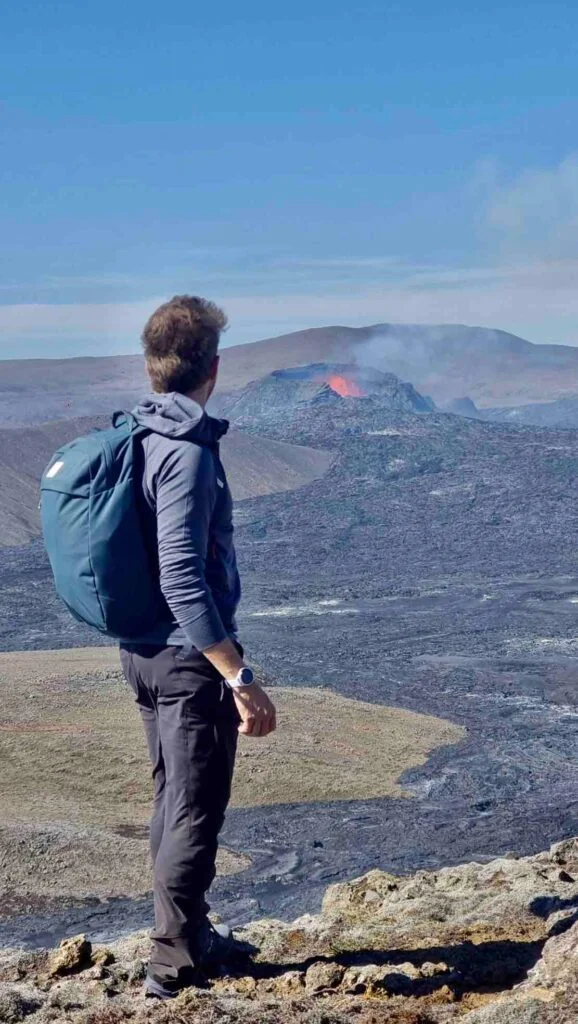
The eruption that began in 2021 near Fagradalsfjall created new lava flows in the Geldingadalir valley. The original report captured a moment when the lava was visible: this situation belongs to a specific phase of volcanic activity and should not be presented as permanent.
The Reykjanes peninsula remains an active volcanic region. Access, trails, air quality, and danger zones can change rapidly. Before any trip, you must consult the Icelandic authorities and SafeTravel, then turn back immediately if the site is closed.
Two regions, one trip to organize without rushing
Goðafoss and Mývatn are in the north, while Þingvellir and Reykjanes belong to the southwest. Bringing them together requires several days and long stages: this is not a circuit to be condensed into a weekend.
A coherent itinerary first sets aside several nights in the north, then plans a transfer or a second part of the stay around Reykjavík. This buffer makes it possible to absorb weather changes without sacrificing visits.
Tips for exploring Iceland safely
- Roads: check the weather, wind, and road conditions every day with the official Icelandic services.
- Distances: do not rely only on kilometers; conditions can greatly extend travel times.
- Clothing: wear warm, breathable, and waterproof layers, even in summer.
- Geothermal areas: stay on marked paths and never touch a spring or a steaming patch of ground.
- Volcanoes: respect all closures and check alerts before approaching Reykjanes.
- Nature: do not walk on moss or on a fresh lava flow, and take all your rubbish with you when you leave.
An island that demands humility
Iceland fascinates because its landscapes make normally hidden forces visible. A waterfall, a fissure, or a lava flow tells the story of the same territory in motion.
The best way to discover it is to keep a flexible schedule, follow local instructions, and accept that the weather or geological activity always has the final say.